






























How DevOps Support Services Help Scale Your Infrastructure Efficiently?
Discover how DevOps support services help scale your infrastructure efficiently, improve performance, and ensure seamless business operations.
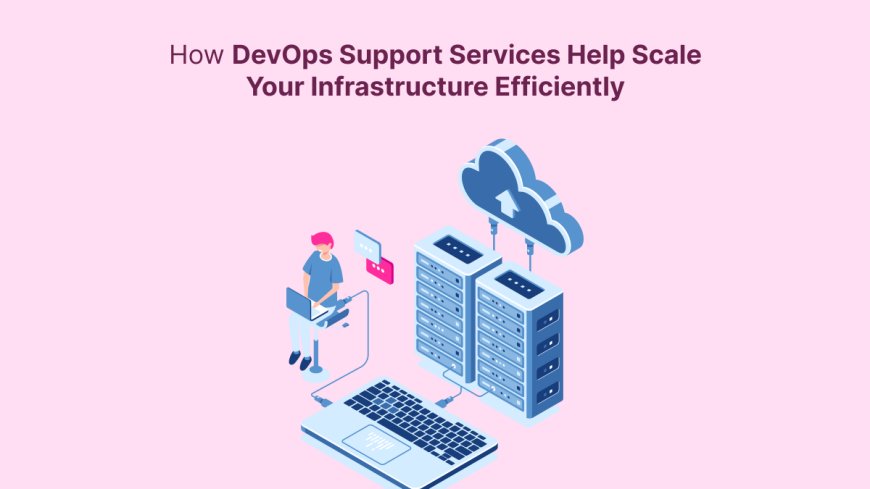
Introduction to DevOps and Infrastructure Scaling
In todays competitive digital environment, every business needs to be agile, efficient, and ready to grow. Whether you're running a startup or managing a large enterprise, scaling your IT infrastructure is not just an optionits a necessity. But doing it manually or without the right strategy can lead to high costs, wasted resources, and a lot of technical issues. Thats where DevOps support services come into the picture.
DevOps is a practice that brings development and operations together to create a faster, more reliable, and more automated approach to building and managing software and infrastructure. DevOps support services provide the expertise, tools, and strategies businesses need to scale their systems smoothly and effectively. From automating deployments to managing cloud resources and improving team collaboration, DevOps support services are essential for long-term growth and performance.
In this blog, well explore how DevOps support services can help scale your infrastructure efficiently and why its a smart investment for any modern business.
What Are DevOps Support Services?
Defining DevOps Support
DevOps support services are a combination of ongoing technical assistance, process optimization, automation implementation, monitoring, and infrastructure management. The goal of these services is to help businesses adopt DevOps practices and maintain them over time while aligning IT operations with business needs.
DevOps support teams work closely with development and operations teams to ensure systems run efficiently, securely, and reliablyeven as they grow. They provide guidance on tool usage, infrastructure scaling, continuous integration and deployment (CI/CD), cloud management, and more.
Core Components of DevOps Support
- Automation Support: Helping automate repetitive tasks like testing, deployment, and server provisioning.
- CI/CD Pipeline Maintenance: Ensuring smooth and fast code integration and delivery.
- Monitoring and Incident Management: Keeping systems stable with proactive performance tracking.
- Infrastructure as Code (IaC): Managing infrastructure through version-controlled code for better scalability.
- Security and Compliance Checks: Integrating security into every stage of development and deployment.
Why Infrastructure Scaling Matters for Business Growth
Adapting to Increased Demand
As your business grows, so does the demand on your IT systems. Whether you're onboarding more users, releasing new features, or expanding globally, your infrastructure must be able to handle the load. Without a scalable setup, performance may drop, users may face downtime, and your reputation could suffer.
DevOps support services ensure your systems are built for flexibility. They help you expand servers, optimize workloads, and configure your cloud environment so it adjusts automatically based on demand.
Cost Efficiency
Scaling doesnt just mean adding more resourcesit means using them wisely. Traditional methods often lead to overprovisioning, where businesses pay for resources they dont fully use. DevOps teams use cloud tools and automation to manage resources efficiently. With techniques like autoscaling and container orchestration, businesses only use what they need, when they need it.
This cost-effective scaling is especially valuable for startups and small businesses looking to grow without burning through their budgets.
How DevOps Support Services Enable Efficient Scaling
Infrastructure as Code (IaC)
Infrastructure as Code is one of the biggest game-changers in modern IT. Instead of manually setting up servers or configurations, everything is written in code and version-controlledjust like software.
DevOps support teams help businesses adopt IaC tools like Terraform, AWS CloudFormation, or Ansible. This approach allows infrastructure to be replicated across environments easily, ensures consistency, and speeds up scaling. It also makes rollback and disaster recovery much easier to manage.
Automated Deployments and Updates
Manual deployments are time-consuming and prone to error. When scaling infrastructure, you need to be able to deploy new resources or update existing ones quickly and safely.
DevOps support services implement automated deployment pipelines using tools like Jenkins, GitLab CI/CD, or GitHub Actions. These pipelines ensure that new code or configurations are tested, approved, and deployed automatically. This means faster updates, fewer bugs, and a smoother scaling process.
Monitoring and Real-Time Performance Tracking
Scaling isn't just about adding more serversits also about understanding how your systems are performing. DevOps support includes setting up real-time monitoring tools that help you keep track of system health, resource usage, and performance trends.
With tools like Prometheus, Grafana, Datadog, or New Relic, teams can spot problems before they become serious. For example, if a spike in user traffic is slowing down your app, alerts can be triggered to scale resources automatically or take corrective actions immediately.
Cloud Optimization and Management
Most businesses rely on cloud infrastructure for flexibility and scalability. But without proper management, cloud costs can rise quickly and resources can become underused or misconfigured.
DevOps support teams help set up and manage cloud services like AWS, Azure, or Google Cloud. They optimize server usage, configure load balancers, set up storage, and use autoscaling policies that adjust capacity in real time. This ensures you're always ready to grow without overspending.
Containerization and Orchestration
Containers have become a standard in scalable architecture. They allow applications to run reliably across different environments, and theyre lightweight and easy to manage.
DevOps support includes setting up Docker containers and using orchestration platforms like Kubernetes to manage them. With this setup, scaling becomes much easier. If your app needs to handle more traffic, Kubernetes can spin up more containers automatically. This makes the entire infrastructure more agile and efficient.
Read more: Boost Your IT Efficiency with Expert DevOps Services Company Solutions
Benefits of Using DevOps Support Services for Scaling
Faster Time-to-Scale
With DevOps support, scaling your infrastructure doesnt take weeks or months. Automated provisioning, container orchestration, and pre-built templates allow new environments to be set up in minutes. This speed helps businesses stay ahead of user demands and competitive pressure.
Reduced Downtime and Better Reliability
Downtime during scaling can cost money and customer trust. DevOps practices like blue-green deployments and rolling updates ensure that new infrastructure can be added or updated without impacting users. Support teams also monitor systems constantly to catch issues early and fix them before they affect users.
Consistency Across Environments
When infrastructure is managed as code, it's easy to keep development, staging, and production environments consistent. This reduces errors caused by configuration mismatches and makes testing more reliable. DevOps support services ensure your entire environment behaves the same across all levels.
Increased Agility for Innovation
Scaling isn't just about growthits about the ability to innovate quickly. DevOps support teams make sure your systems are flexible and robust so you can experiment with new features, launch new products, or enter new markets without being slowed down by infrastructure limitations.
Real-World Applications Across Industries
Companies in different sectors use DevOps support services to scale efficiently:
- E-commerce platforms scale infrastructure during holiday seasons or flash sales without downtime.
- Healthcare apps manage increased traffic during public health campaigns while staying secure and compliant.
- Finance platforms handle heavy data processing with optimized cloud workloads.
- Media and streaming apps use containers to deliver high-quality content to millions of users simultaneously.
These examples show how DevOps support services are essential for digital businesses of all types.
Conclusion
Scaling infrastructure is a critical part of business growth, but doing it manually or without a clear strategy can be costly and complex. DevOps support services provide the technical expertise, automation tools, and strategic planning businesses need to scale efficiently. From Infrastructure as Code and automated deployments to cloud optimization and container orchestration, DevOps makes it easier to grow without compromising on performance or reliability.
If you're planning to expand your digital services or need to make your systems more flexible, partnering with a reliable clone app development company that also offers DevOps support is a wise choice. This approach ensures your applications can scale effortlessly while keeping costs under control and performance at its best.
Frequently Asked Questions
What are DevOps support services?
DevOps support services offer ongoing technical assistance and process management to help businesses adopt and maintain DevOps practices, especially for scaling infrastructure and improving system performance.
How do DevOps services help with infrastructure scaling?
They use automation, monitoring, and cloud tools to make scaling smooth and efficient, allowing businesses to handle more users or workloads without major changes or downtime.
Can DevOps support services reduce IT costs?
Yes, by optimizing cloud usage, automating processes, and reducing manual errors, DevOps services help lower operational costs while improving efficiency.
Do I need a full DevOps team to scale my infrastructure?
Not necessarily. Many businesses work with DevOps support companies that provide expert assistance without needing to hire a full-time internal team.
Is DevOps support suitable for startups?
Absolutely. Startups benefit from DevOps by building scalable, efficient systems from the start, allowing them to grow without running into major tech roadblocks.





![Play99 Login & Registration Guide for Indian Users [2025 Update]](https://www.atlantanewsplus.com/uploads/images/202507/image_140x98_6870c1df7bfcd.jpg)


