

























The Ultimate Guide to Choosing the Right USB Wall Charger for All Your Devices
In today’s digital-first world, a USB wall charger is more than just an accessory—it’s a daily necessity.

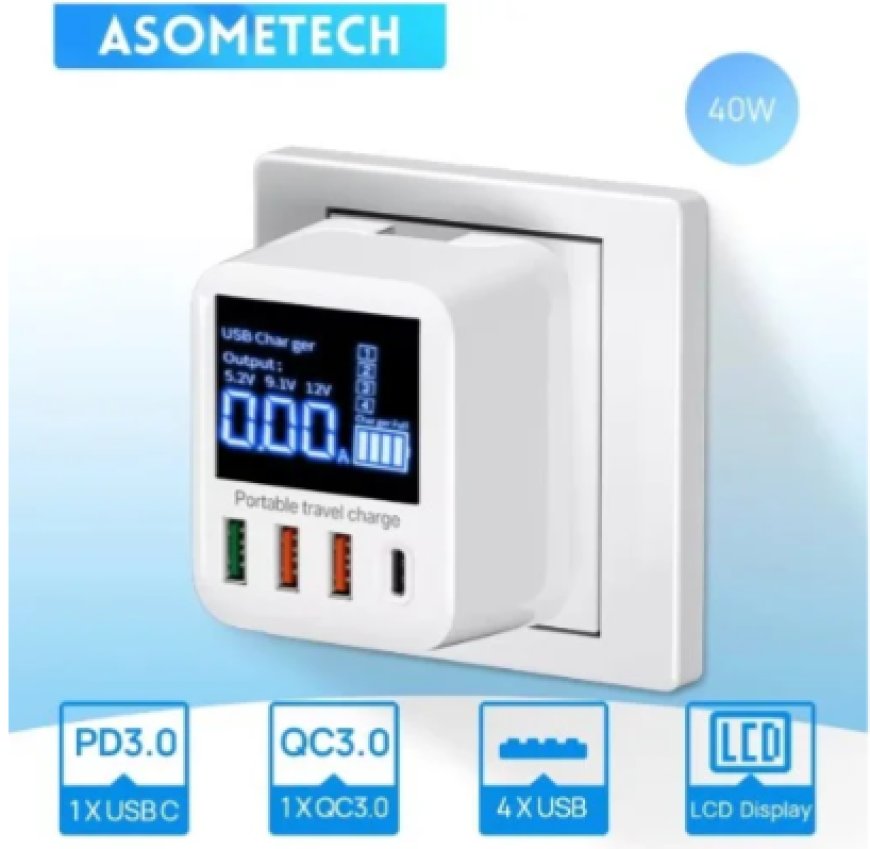
In todays digital-first world, a USB wall charger is more than just an accessoryits a daily necessity. Whether you're charging smartphones, tablets, wearables, or power banks, the wrong charger can lead to slow charging, overheating, or even device damage. PUZB brings a comprehensive breakdown of what makes a USB wall charger reliable, efficient, and safebacked by data and expert research.
Lets explore how to choose the best charger that keeps up with your lifestyle and tech needs.
What Is a USB Wall Charger?
A USB wall charger is a power adapter that plugs directly into an electrical outlet and features one or more USB ports to charge digital devices. These are different from the standard chargers that come with phones, offering more ports, higher output, and faster charging speeds when optimized correctly.
Key Factors to Consider Before Buying a USB Wall Charger
When buying a USB wall charger, consider the following elements to avoid compatibility and performance issues:
| Feature | Why It Matters | What to Look For |
|---|---|---|
| Power Output (Wattage) | Impacts charging speed | Choose chargers with 18W65W for phones, 65W+ for laptops |
| Port Type | USB-A vs. USB-C | Prefer USB-C with Power Delivery (PD) for modern devices |
| Number of Ports | Useful for multi-device charging | At least 24 ports is ideal |
| Smart Charging Tech | Prevents overcharging, overheating | Look for GaN or Quick Charge 3.0/4.0 |
| Build Quality | Affects durability and safety | Fire-retardant material, certified by CE/FCC/UL |
Types of USB Wall Chargers
-
Standard USB-A Chargers
Ideal for older smartphones and small gadgets. Slower charging, limited compatibility. -
USB-C PD Chargers
Offers Power Delivery (PD) for faster and safer charging. Compatible with most modern devices including iPhones, Androids, iPads, and laptops. -
Multi-Port Chargers
Perfect for families or workstations. Multiple outputs allow simultaneous charging without reducing speed. -
GaN Chargers
Made from Gallium Nitride, these are smaller, faster, and more efficient. Often support higher wattages in compact sizes.
Why USB-C with Power Delivery is the Future
Power Delivery (PD) uses smart voltage regulation to optimize charging based on the devices power needs. According to USB-IF (USB Implementers Forum):
-
USB-C PD can deliver up to 100W
-
It charges devices 70% faster than conventional USB-A chargers
-
Reduces battery degradation through intelligent power control
Expert Note: Apple, Samsung, and Google now recommend PD-enabled USB-C chargers for their devices.
Tips to Use Your USB Wall Charger Safely and Efficiently
-
Use the original cable or one certified by your device brand
-
Avoid charging in extreme temperatures
-
Dont plug multiple high-draw devices into low-wattage chargers
-
Replace chargers showing visible damage, heat marks, or frayed ports
Compatible Wattage Guide by Device
| Device Type | Recommended Charger Wattage |
|---|---|
| iPhone / Android | 18W 30W |
| iPad / Tablet | 30W 45W |
| Laptop (USB-C) | 45W 100W |
| Smartwatches / Earbuds | 5W 18W |
Frequently Asked Questions (FAQs)
Q1. Can I use one USB wall charger for all my devices?
Yes, if it supports multiple ports and variable wattage. Ensure it includes USB-C PD for newer gadgets and USB-A for older ones.
Q2. Whats the difference between Quick Charge and Power Delivery?
Quick Charge is a proprietary tech by Qualcomm; Power Delivery is a universal standard that supports higher power and broader compatibility.
Q3. Are fast chargers safe for long-term use?
Yes, when from reputable brands and certified with safety standards (UL, CE, FCC). Avoid third-party knockoffs.
Q4. What is a GaN USB charger, and should I get one?
GaN (Gallium Nitride) chargers are more compact, heat-efficient, and high-performance. Great for travel and charging laptops or multiple devices at once.
Q5. Can I use a higher wattage charger on a low-wattage device?
Yes. Devices only draw the power they need, provided the charger is smart and regulated.
Final Thought
A USB wall charger isnt just a plug-and-play device anymoreits a key player in your tech ecosystem. Understanding wattage, port type, and compatibility allows you to choose a charger that enhances speed, safety, and device longevity. Whether you're at home, work, or traveling, investing in a high-quality charger ensures you're always powered and ready.


![Play99 Login & Registration Guide for Indian Users [2025 Update]](https://www.atlantanewsplus.com/uploads/images/202507/image_140x98_6870c1df7bfcd.jpg)